

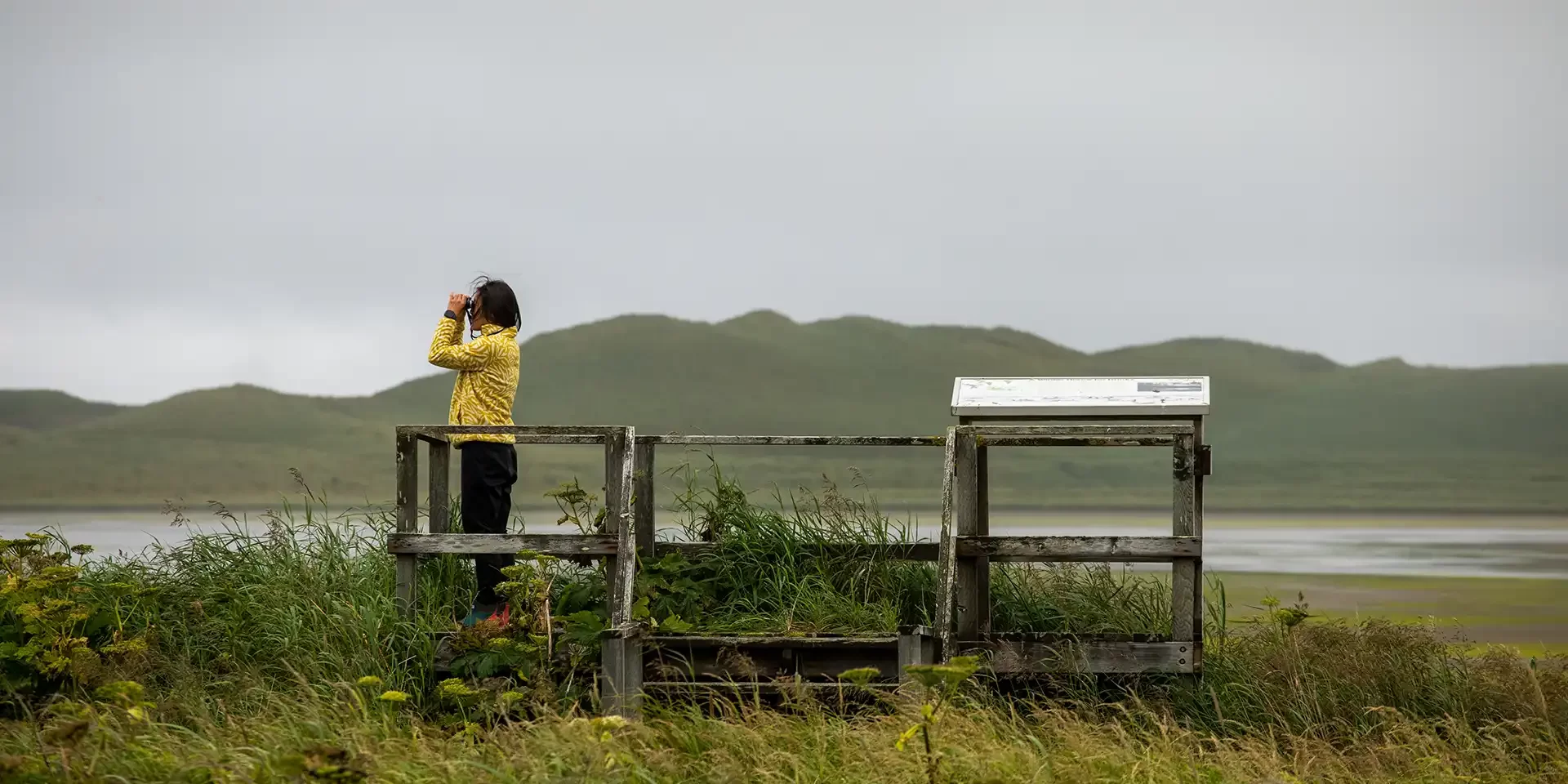
For many birders, seeing a single unexpected species can turn an ordinary trip into a lifelong memory. On Adak Island, the possibility of encountering birds rarely observed elsewhere in North America is only part of the appeal.
Located nearly 1,200 miles southwest of Anchorage in Alaska’s Aleutian Islands, Adak sits between the North Pacific Ocean and Bering Sea. Its remote position, varied habitats, and exposure to far-reaching migration routes make it an extraordinary destination for birders, wildlife photographers, and nature enthusiasts.
Beaches, mudflats, freshwater lakes, wetlands, tundra, meadows, bays, and rocky coastlines are all found across the island. More than half of Adak is also part of the Alaska Maritime National Wildlife Refuge, placing birders within one of the country’s largest and most ecologically diverse refuge systems.
Adak does not promise easy travel or guaranteed sightings. Its weather changes quickly, services are limited, and many of its best experiences require patience and preparation. Those same qualities, however, are part of what makes Adak Island worth visiting.
For birders willing to travel far beyond the usual destinations, Adak offers the chance to explore a landscape shaped by migration, weather, remoteness, and the possibility of discovering something unexpected.
Why Is Adak Such an Important Birding Destination?
Adak’s location is central to its appeal.
The Aleutian Islands form a long arc between mainland Alaska and Asia. Adak lies near the middle of that chain, approximately equidistant from Seattle and Tokyo. Birds moving across the North Pacific and Bering Sea may pass through or stop on the island during migration.
This geographic position gives birders a chance to observe familiar Alaska species alongside occasional visitors from Asia and other distant regions. The island has documented records of birds that are rare, irregular, or accidental in much of North America. The official U.S. Fish and Wildlife Service Adak bird list uses seasonal and abundance codes to distinguish common species from uncommon, rare, irregular, casual, and accidental sightings.
That distinction is important. Adak is not a place where every visiting birder is guaranteed to see an exceptionally rare species. Weather systems, wind direction, timing, migration patterns, and simple chance influence what appears on the island.
For serious birders, that uncertainty is part of the attraction. Each morning may bring new conditions, and each stretch of wetland, shoreline, or tundra can offer a reason to stop and look more closely.
Serious birders can consider joining Western Field Ornithologists, an organization that connects birders and ornithologists across western North America.
The Possibility of Asian Vagrants
One of Adak’s strongest draws is the possibility of finding Asian vagrants, or birds that appear well outside their expected geographic range.
Species associated with Eurasia or Asia may occasionally reach the Aleutian Islands after crossing open water or being carried off course by weather. Experienced birders pay close attention to wind direction and approaching storm systems because changing conditions may influence migration and the arrival of unexpected birds.
Adak’s historical records include species such as:
- Tufted Duck
- Smew
- Garganey
- Eastern Spot-billed Duck
- Common Pochard
- Whooper Swan
- Tundra Bean Goose
- Lesser Sand-Plover
- Ruff
- Wood Sandpiper
- Far Eastern Curlew
- Common Cuckoo
The frequency of these species varies substantially. For example, the official Adak bird list classifies some by season as uncommon or irregular, while others are considered casual or accidental. Even a species with previous Adak records may not appear during a particular visit.
Birders should therefore treat rare species as possibilities rather than promises. A successful trip does not depend on finding every target bird. Adak’s regularly occurring species, resident birds, coastal wildlife, and dramatic environment can make the journey worthwhile even when migration conditions do not produce a major rarity.
What Birds Can You See on Adak?
Adak supports several major groups of birds across a relatively concentrated area. What visitors see depends on the season, habitat, weather, and amount of time spent in the field.
Before traveling, birders can review the official Adak bird list and recent observations on the eBird Adak Island hotspot. Because eBird reports reflect observations submitted by individual users, they are particularly useful for reviewing recent activity and historical sightings, but they should not be interpreted as a guarantee that a species is still present.
Waterfowl
Adak’s lakes, lagoons, ponds, sheltered bays, and wetlands attract a wide range of ducks, geese, and swans.
Depending on the season, birders may observe familiar waterfowl such as Mallards, Northern Pintails, Greater Scaup, Harlequin Ducks, Common Eiders, Long-tailed Ducks, and Red-breasted Mergansers. The U.S. Fish and Wildlife Service list identifies several of these as common during at least part of the year.
Birders may also watch for less predictable species such as Tufted Duck, Smew, Eurasian Wigeon, Garganey, Common Pochard, Whooper Swan, and Tundra Bean Goose. Their seasonal status ranges from uncommon or irregular to casual or accidental, illustrating why careful identification and realistic expectations matter on Adak.
Lagoons and freshwater areas deserve repeat visits. A location that appears quiet in the morning may hold different birds later in the day as weather, water levels, and feeding activity change.
Shorebirds
Adak’s beaches, mudflats, wetlands, and exposed shorelines provide habitat for resident and migrating shorebirds.
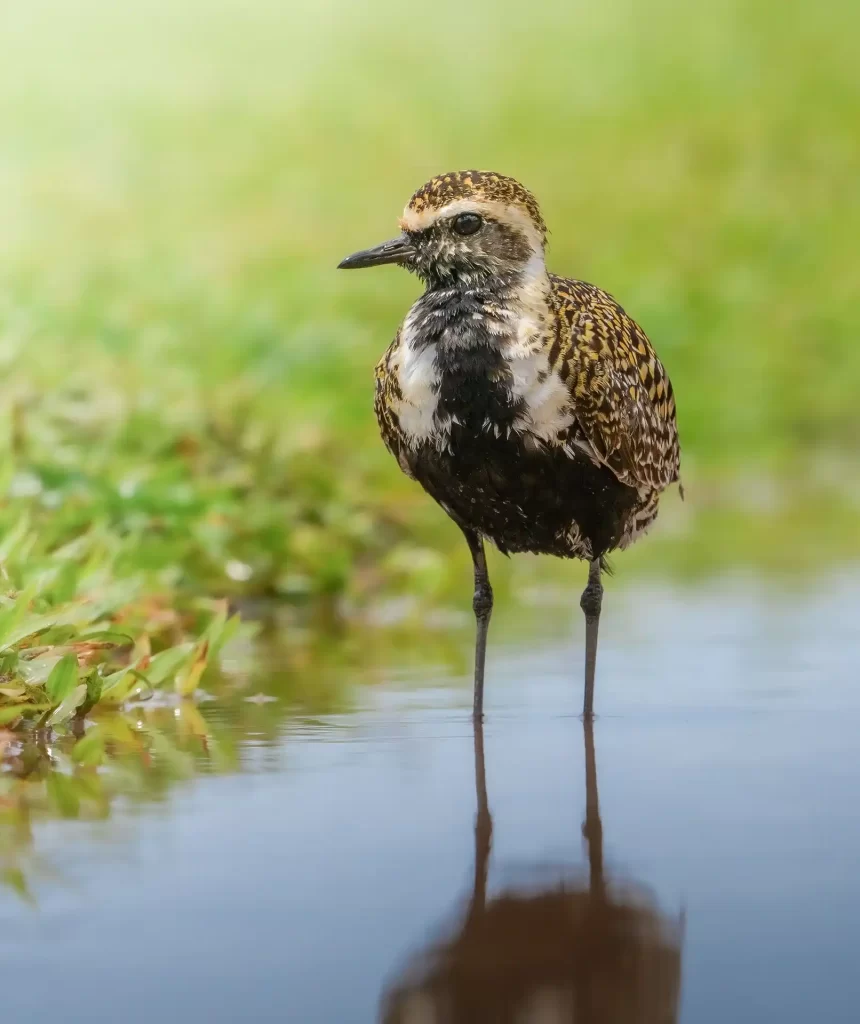
Possible observations include Pacific Golden-Plovers, Semipalmated Plovers, Rock Sandpipers, Sanderlings, Ruddy Turnstones, Bar-tailed Godwits, and Dunlin. Rarer possibilities recorded on the island include Lesser Sand-Plovers, Ruff, Far Eastern Curlews, Wood Sandpipers, and several species of stint.
Shorebirding on Adak often rewards patience. Distant flocks, changing tides, uneven terrain, wind, and poor visibility can make identification challenging. A spotting scope and stable tripod can be especially valuable around mudflats and lagoons.
Seabirds
Surrounded by productive marine waters, Adak offers opportunities to observe seabirds from beaches, bays, overlooks, and rocky coastlines.
Depending on the location and season, visiting birders may see loons, murres, murrelets, auklets, gulls, terns, cormorants, and other coastal species. Recent and historical records can be explored through the island’s eBird hotspot and checklist data.
The Whiskered Auklet is one of the species closely associated with the Aleutian region. Sightings generally require the right location, conditions, and sometimes access to offshore waters, so travelers should not assume the species can reliably be observed from town or from every shoreline.
Gannet Rocks, located near downtown, also offers birding opportunities along a relatively accessible trail. The area takes its name from rocky outcroppings used by seabirds and can be combined with hiking, coastal viewing, and photography.
Tundra and Upland Birds
Adak’s open tundra and low vegetation create habitat for birds that may be easier to hear than see when wind and distance are factors.
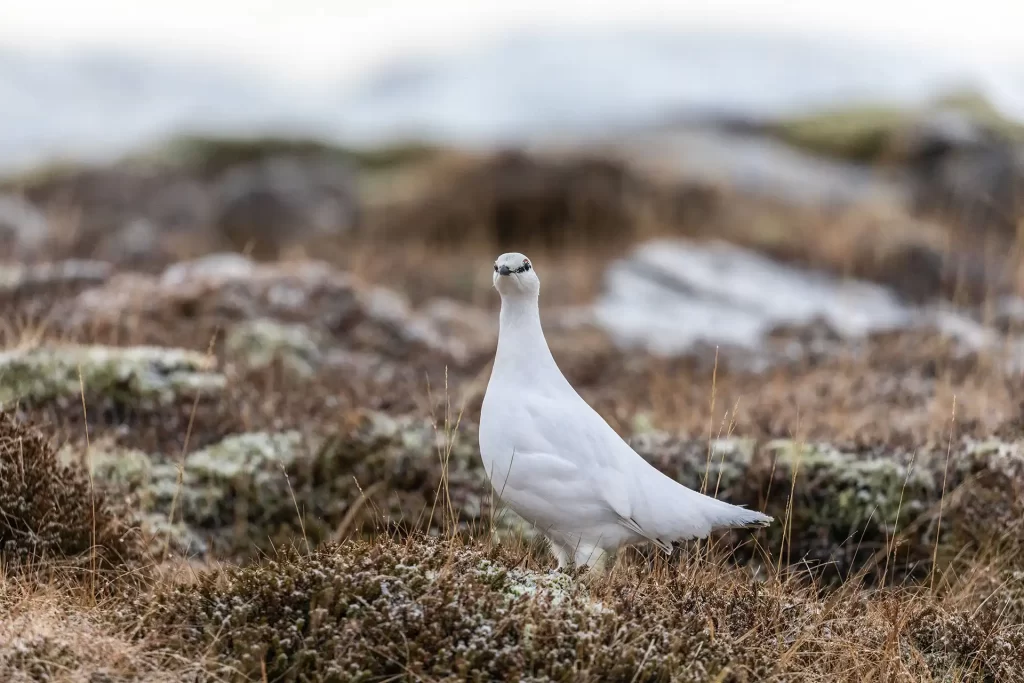
Rock Ptarmigan are among Adak’s characteristic upland birds. The species appears throughout the year on the official Adak bird list and is also identified by eBird as one of the island’s iconic birds.
Other birds using open habitats may include passerines, raptors, and seasonal migrants. The lack of tall trees across much of the island changes the birding experience. Visitors may spend more time scanning open slopes, roadside vegetation, sheltered depressions, and patches of cover that can concentrate birds during severe weather.
When Is the Best Time to Go Birding on Adak?
There is no single best time for every birder. The right season depends on whether your priority is migration, breeding activity, coastal species, photography, or broader nature exploration.
Spring Migration
Spring is an especially exciting time for birding on Adak. Migrating waterfowl, shorebirds, seabirds, and passerines may move through the island, and changing weather can create the possibility of uncommon arrivals.
The official U.S. Fish and Wildlife Service bird list defines spring as March through May and provides seasonal abundance information for birds documented on the island.
For birders hoping to encounter Asian vagrants, spring can offer intriguing possibilities. However, even well-timed trips may produce only a small number of unusual species. Wind, weather, and migration conditions determine whether birds reach the island during a particular travel window.
Spring visitors should also prepare for cold temperatures, wind, rain, fog, and rapidly changing visibility.
Summer Birding
Summer can appeal to birders who want to combine wildlife viewing with hiking, photography, fishing, paddleboarding, or other outdoor activities.
Many breeding and resident birds remain present, and summer’s longer days create more time to explore several habitats. The weather is often somewhat milder between June and September, but rain, fog, and strong wind remain common.
Visitors interested in balancing birdwatching with a wider range of outdoor activities can review Aleut Ventures’ guide to when to visit Adak.
Fall Migration
Fall can bring another period of exciting bird movement as migrants travel south and weather systems cross the Aleutians.
The U.S. Fish and Wildlife Service defines fall as September through November in its seasonal bird list. Species status can differ significantly between spring and fall, so birders should review the seasonal codes for individual targets rather than assume both migration periods offer identical possibilities.
As in spring, fall birding involves an element of chance. Repeat visits to lagoons, lakes, sheltered valleys, shorelines, and patches of cover can be productive as birds move through the island.
Flexibility Matters in Every Season
Regardless of when you visit, flexibility is one of the most important parts of an Adak birding plan.
Fog may obscure a productive shoreline. Wind can make scope use difficult. Rain may change road or trail conditions. A quiet area may become active later in the day, while yesterday’s best location may hold very little the following morning.
Rather than building an itinerary around one bird or one location, identify several habitats that can be revisited under different conditions.
The Habitats That Make Adak Special
Adak’s value as a birding destination is closely connected to its habitat diversity. Birders can move between freshwater, coastal, wetland, and tundra environments without leaving the island.
Clam Lagoon and Mudflats
Clam Lagoon is one of Adak’s most recognizable birding areas. Its water, shoreline, mudflats, and surrounding vegetation create opportunities to observe waterfowl, shorebirds, gulls, and other coastal species.
The Clam Lagoon area includes multiple eBird hotspots, including records associated with the lagoon and its mudflats. Reviewing recent reports before and during a trip can help birders understand what other observers have documented.
Tides, weather, and visibility influence what can be seen, so the lagoon is worth visiting more than once.
Freshwater Lakes and Wetlands
Adak has freshwater lakes, ponds, marshes, and sedge-filled wetlands that support waterfowl and migratory birds.
Andrew Lake is one accessible location where visitors can combine birdwatching with walking, fishing, or paddleboarding. Birders should remain alert to land boundaries and follow posted restrictions, particularly near federally restricted areas.
Wetlands throughout the island may also attract shorebirds and passerines seeking food and shelter during migration.
Beaches, Bays, and Rocky Coastlines
Adak’s beaches and coastline provide opportunities to scan for seabirds, waterfowl, shorebirds, and marine wildlife.
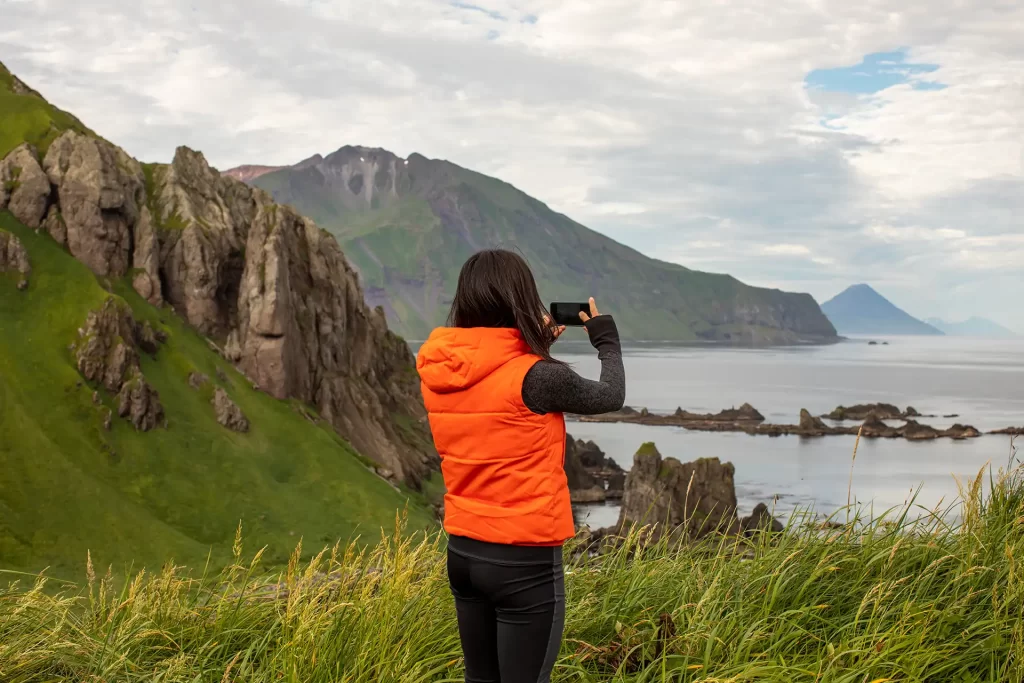
Kuluk Bay, Sweeper Cove, Finger Bay, and other coastal areas offer different viewing conditions depending on wind direction, tides, and sea state. These locations can also be productive for photographers, especially as changing light moves across the water and surrounding mountains.
Coastal areas can be exposed and slippery. Birders should wear appropriate footwear, remain aware of tides and surf, and avoid placing themselves or their equipment too close to unstable edges.
Meadows and Tundra
Broad meadows and tundra dominate much of the island. Although these open areas may initially appear sparse, they support upland birds, nesting species, and migrants using low vegetation for shelter.
Roadside birding can be productive, particularly when weather makes longer hikes impractical. Visitors should park only where it is safe and permitted, avoid blocking roads, and remain within approved access areas.
Alaska Maritime National Wildlife Refuge
More than half of Adak Island is part of the Alaska Maritime National Wildlife Refuge. This gives visitors access to a much larger ecological story extending across islands and coastal habitats throughout Alaska.
Refuge lands and Aleut-owned lands are subject to different access requirements. Travelers should understand land ownership, follow posted notices, and verify whether a Land Use Permit is required before entering an area.
Where Are Some of the Best Places to Bird on Adak?
There is no single location that guarantees the best birding. The island is most rewarding when visitors explore different habitats and return to promising areas as conditions change.
Potential starting points include:
- Clam Lagoon and its mudflats
- Andrew Lake
- Gannet Rocks
- Kuluk Bay
- Sweeper Cove
- Finger Bay
- Accessible beaches and coastal overlooks
- Meadows and wetlands along established roads
- Approved trails and refuge areas
Birders can use the eBird Adak Island hotspot group to review individual locations, recent checklists, seasonal patterns, and previously reported species.
The general Adak hotspot is most useful when a checklist covers multiple locations. When submitting observations, eBird recommends beginning a separate checklist for each specific hotspot whenever possible.
Visitors should remember that a previous report does not guarantee a bird will remain in the same location. eBird is most useful as a planning and documentation tool, not as a promise of current conditions.
Why Adak Appeals to More Than Checklist Birders
Birding may provide the reason for traveling to Adak, but it rarely remains the only memorable part of the trip.
Wildlife Photographers
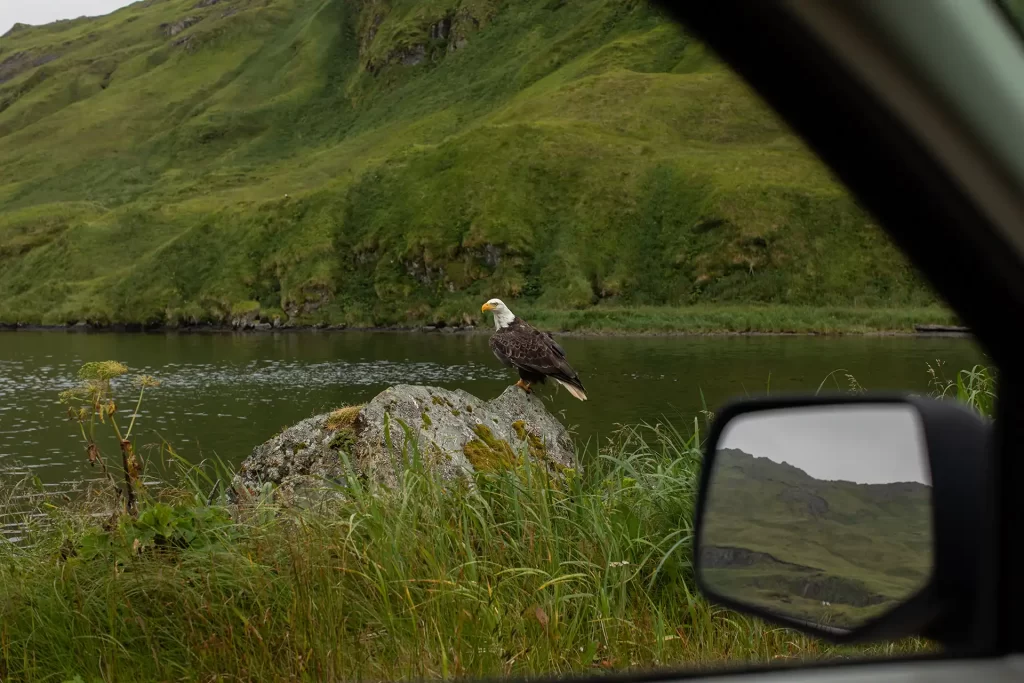
Adak combines wildlife with expansive landscapes, turbulent weather, and rapidly changing light. A bird photographed against open tundra, dark water, a volcanic ridgeline, or a passing storm can tell a much larger story about the island.
Photographers should bring rain protection for cameras and lenses, dry bags, lens cloths, spare batteries, and portable charging equipment. Long lenses are useful, but visitors should avoid approaching wildlife simply to create a closer image.
Nature Enthusiasts
Adak also offers opportunities to observe caribou and marine wildlife. There are no bears on the island, but that does not eliminate the risks associated with remote travel. Weather, rough terrain, cold water, limited communications, and distance from emergency services require careful preparation.
For a broader overview of the island’s landscapes, activities, and travel considerations, visitors can read Aleut Ventures’ beginner’s guide to exploring Adak.
Hikers and Outdoor Travelers
Birding can easily be combined with hiking, beachcombing, photography, fishing, e-biking, and historical exploration.
Aleut Ventures offers Adak equipment rentals and outdoor experiences, including fat-tire e-bikes, paddleboards, and fishing equipment. An e-bike may help birders move between certain habitats, while a vehicle is usually the more practical choice for transporting spotting scopes, tripods, camera equipment, waterproof clothing, and emergency supplies.
Travelers Seeking Solitude
Some birding destinations are crowded during migration. Adak offers a very different experience.
Visitors may spend hours scanning wetlands, beaches, and hillsides without encountering another birder. That solitude creates space to slow down, listen, revisit the same habitats, and pay closer attention to subtle changes across the landscape.
How Should Birders Prepare for an Adak Trip?
Preparation has a direct effect on both safety and enjoyment. Adak has limited shopping, dining, medical, and transportation services, so birders should arrive with nearly everything they expect to need.
The free Adak Travel Guide provides additional information about transportation, accommodations, food, clothing, communications, land access, and outdoor activities.
Birding and Photography Equipment
Consider bringing:
- Binoculars
- Spotting scope
- Stable tripod
- Camera and appropriate lenses
- Rain covers for optics and camera equipment
- Dry bags
- Lens cloths
- Field guide or offline birding application
- Notebook or digital checklist
- Spare batteries
- Portable charging equipment
- Backpack with a waterproof cover
Download any maps, identification resources, field guides, and checklists you may need before traveling into areas with limited cellular service.
Clothing and Footwear
Adak’s conditions can change quickly, sometimes within the same hour. Birders may spend long periods standing still in exposed areas, which can feel considerably colder than walking or hiking.
Recommended clothing includes:
- Non-cotton base layers
- Warm midlayers
- Waterproof jacket and pants
- Wool socks
- Warm hat and gloves
- Sturdy waterproof hiking footwear
- Rubber boots for wet or muddy shorelines
- Additional dry layers stored in a waterproof bag
A brimmed hat and glare-reducing sunglasses can also make extended scanning more comfortable when skies clear.
Food and Personal Supplies
Bring enough food for your entire visit, plus an additional day or two in case your departure is delayed.
Tundra Tavern is currently the primary prepared-food option on Adak, but visitors should verify its operating schedule and avoid relying on it for every meal. Shopping is limited, and specialized food, toiletries, medications, and equipment may not be available locally.
The fully furnished townhomes at Adak Island Inn include kitchens with refrigerators, stoves, ovens, microwaves, dishes, and cookware. This allows birders to prepare meals around early-morning outings and changing field conditions.
Communications and Safety
Cellular coverage should not be treated as dependable once visitors leave town. Carrying a satellite messenger or satellite phone is strongly recommended when exploring remote areas.
Birders should also:
- Share a daily route or activity plan with someone else
- Carry emergency food and water
- Bring basic first-aid supplies
- Download offline maps
- Carry a copy of applicable permits
- Pay attention to road and weather conditions
- Avoid entering restricted areas or structures
- Allow enough time to return before conditions worsen
The City of Adak advises visitors that cellular service is extremely limited and not guaranteed. It also recommends bringing sufficient food because local inventory and dining options are limited.
Transportation
A rental vehicle is often the most practical transportation choice for a dedicated birding trip.
Scopes, tripods, cameras, rain gear, food, and emergency equipment take up considerable space. A vehicle also makes it possible to respond to changing weather, revisit several habitats, and shelter temporarily when conditions deteriorate.
Adak’s roads vary in condition. Drive slowly, expect rough surfaces, and do not assume every visible route is open to visitors or suitable for a particular vehicle.
Do Birders Need an Adak Land Use Permit?
A recreational Land Use Permit is required for access to Aleut-owned lands on Adak. Each adult generally needs an individual permit, while minors accompanied by a parent or guardian may be included under the adult’s permit. Aleut shareholders and registered descendants are not charged for recreational access but are encouraged to complete the permit process.
Permit options currently include:
- Daily permit: $20 per person
- Weekly permit: $40 per person
- Six-month seasonal permit: $60 per person
- Annual permit: $120 per person
The permit grants access to Aleut-owned lands, roads, and trails covered by its terms. It does not authorize entry into Aleut-owned buildings, bunkers, or other structures. Entering such structures and removing artifacts or materials are prohibited.
Before traveling, birders should review current conditions and apply for an Adak Land Use Permit.
Obtaining a permit is more than an administrative step. The program supports responsible access and Aleut’s stewardship of Unangax̂ ancestral lands, including the protection of cultural, historical, and archaeological sites.
How to Bird Responsibly on Adak
Adak’s remoteness does not make its wildlife and habitats less vulnerable. In some cases, birds that have traveled great distances may be resting, feeding, or recovering from difficult migration conditions.
Responsible birding practices include:
- Observe birds from a respectful distance.
- Avoid flushing resting or feeding birds.
- Do not approach nests or breeding colonies.
- Limit or avoid audio playback, particularly during nesting periods.
- Remain on approved roads, trails, and access areas.
- Follow refuge rules and land-use permit requirements.
- Do not enter abandoned or restricted structures.
- Pack out all food, waste, and equipment.
- Avoid damaging tundra, wetlands, and other sensitive vegetation.
- Do not publish the exact location of a sensitive bird if doing so could increase pressure on it.
- Follow current ethical guidance when photographing or documenting rare species.
Birders should also submit observations responsibly. Accurate dates, locations, counts, photographs, and field notes can make records more useful to other birders and researchers.
Adak is part of the ancestral homeland of the Unangax̂ people. Visitors should approach the island as more than a birding location. It is a living cultural landscape with a long Indigenous history and continuing importance to Aleut shareholders and descendants.
What Makes an Adak Birding Trip Different?
Adak birding is not only about the number of species recorded at the end of the day.
It is about scanning a lagoon while wind moves across the tundra. It is about returning to the same shoreline after the weather changes and discovering that new birds have arrived. It is about seeing a familiar species in a landscape that feels entirely unfamiliar.
It is also about possibility.
A distant bird may turn out to be common. A promising weather system may not produce the hoped-for rarity. Rain or fog may interrupt plans. Yet the next lake, mudflat, beach, or roadside patch of cover may offer something completely different.
That combination of uncertainty, isolation, habitat diversity, and ecological significance is what draws birders so far into the Aleutians.
Is Adak Right for Your Next Birding Trip?
Adak may be a good fit if you:
- Enjoy independent travel
- Can adapt plans around weather
- Are comfortable driving and exploring without a rigid guided itinerary
- Want to bird across several habitat types
- Understand that rare species are never guaranteed
- Can bring your own food, clothing, optics, and safety equipment
- Value solitude as much as a long species list
- Are prepared to follow land-access and wildlife-protection requirements
Adak may be more challenging for travelers who expect guided activities every day, extensive dining and shopping options, consistently calm weather, or a tightly controlled itinerary.
For the right traveler, however, those limitations are part of what makes the island special. Adak remains a destination where exploration feels genuinely independent and every sighting feels connected to a much larger landscape.
Plan Your Adak Birding Adventure
Birders travel to Adak for many reasons: the chance to encounter an unexpected migrant, the diversity of habitats, the island’s resident and coastal birds, and the opportunity to explore one of the most remote destinations in the United States.
Not every trip will produce a major rarity, but every well-planned trip offers the possibility of discovery.
Begin planning by reviewing the Adak Travel Guide, exploring accommodations at Adak Island Inn, checking current reports through the eBird Adak Island hotspot, and securing your Adak Land Use Permit before entering Aleut-owned lands.
Adak does not make birders choose between the journey and the destination. Here, the journey is part of the sighting.

Frequently Asked Questions About Birding on Adak
Why is Adak good for birdwatching?
Adak lies along migration routes crossing the North Pacific and Bering Sea. Its lakes, lagoons, mudflats, beaches, wetlands, tundra, and rocky coastline support many bird groups and occasionally attract species rarely recorded elsewhere in North America.
What rare birds have been seen on Adak?
Adak records include Tufted Duck, Smew, Garganey, Eastern Spot-billed Duck, Common Pochard, Whooper Swan, Tundra Bean Goose, Lesser Sand-Plover, Ruff, Far Eastern Curlew, and other uncommon visitors. The frequency of these birds varies, and some are classified as casual or accidental rather than expected species.
When is the best time to bird on Adak?
Spring and fall migration can provide exciting opportunities for migrant and vagrant birds. Summer allows visitors to combine birdwatching with hiking, photography, fishing, and other outdoor activities. The best time depends on the visitor’s target species and tolerance for changing weather.
Are rare birds guaranteed?
No. Rare sightings depend on migration timing, wind, weather, and chance. Birders should plan a trip around Adak’s complete birding experience rather than one target species.
Where can visitors go birdwatching?
Popular areas include Clam Lagoon, Andrew Lake, Gannet Rocks, Kuluk Bay, Sweeper Cove, Finger Bay, beaches, wetlands, and approved trails. Access requirements vary by land ownership.
Do birders need a rental vehicle?
A vehicle is highly useful for reaching multiple habitats and transporting spotting scopes, tripods, food, waterproof clothing, and emergency supplies. Some locations near town may be reached on foot or by e-bike.
Do I need a Land Use Permit?
A permit is required for access to Aleut-owned lands. It does not authorize entry into buildings, bunkers, restricted areas, or other structures. Visitors should review the official permit terms before traveling.
What equipment should birders bring?
Binoculars, a spotting scope, a stable tripod, weather protection, waterproof footwear, offline maps, spare batteries, dry bags, and a satellite communication device are strongly recommended.
Where can I find recent Adak bird sightings?
The eBird Adak Island hotspot includes recent checklists and reports from specific locations around the island. Sightings are user-submitted and should be treated as planning information rather than confirmation that a bird remains present.
How many days should I plan for an Adak birding trip?
A multi-day stay gives visitors time to explore different habitats and revisit locations under changing conditions. The final trip length will also depend on the available flight schedule.
Can nature photographers enjoy Adak even if they are not serious birders?
Yes. Adak offers coastal wildlife, caribou, volcanic terrain, freshwater lakes, historic landscapes, dramatic weather, and expansive views in addition to birdwatching.