

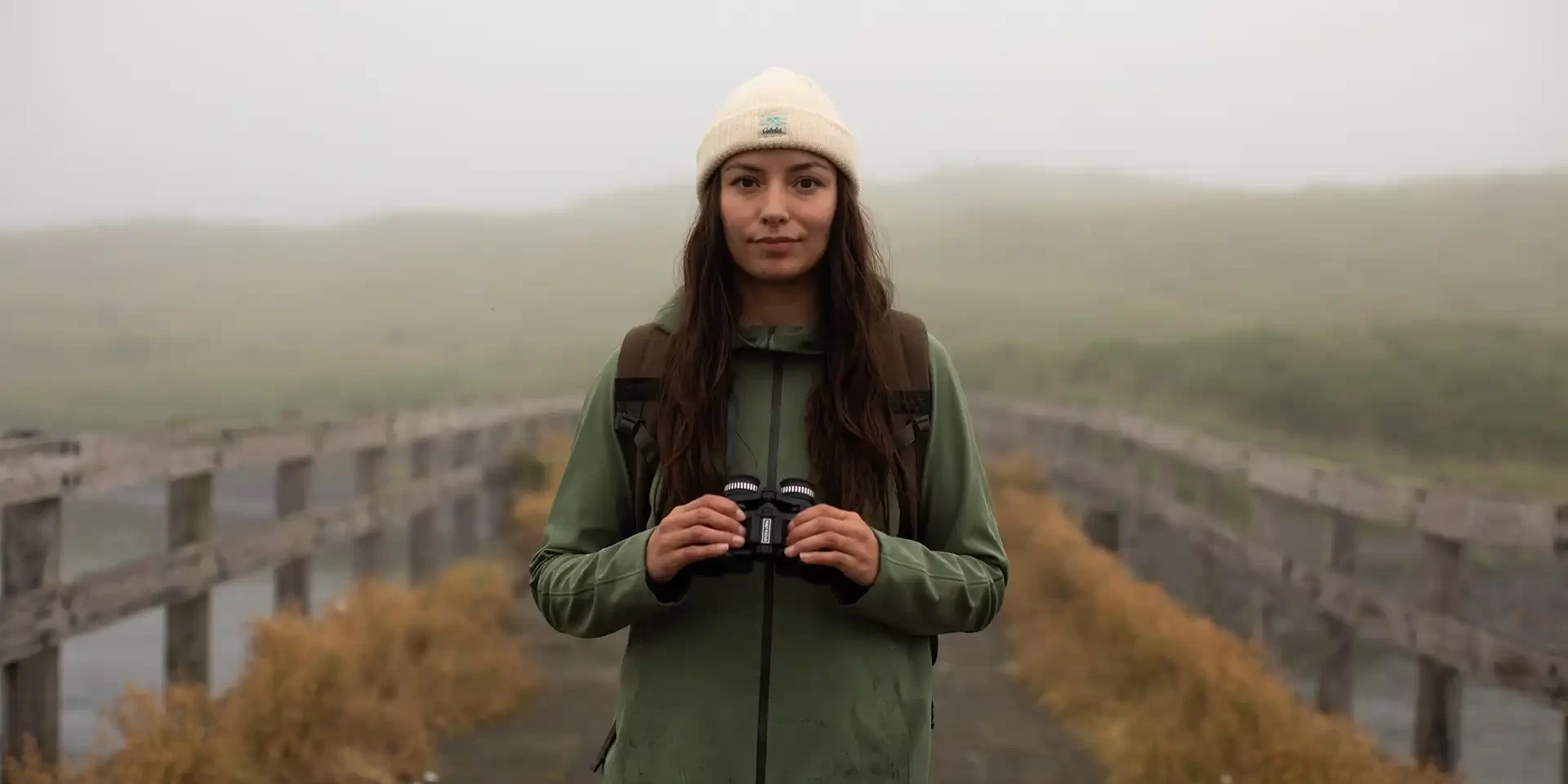
Rugged mountains disappear into passing clouds. Wind moves across open tundra and quiet shorelines. Broad roads lead past weathered military buildings, freshwater lakes, beaches, and trails where you may not encounter another person all day.
So, what is Adak, Alaska actually like?
Adak is wild, remote, unpredictable, and unlike almost anywhere else in the United States. Its dramatic landscapes and powerful weather create an immediate sense of adventure, while the remnants of a once-bustling military installation give parts of the island an almost surreal quality. It is the kind of place where nature, history, and solitude are not simply attractions. They shape the entire experience.
Adak is not a traditional tourism destination with guided excursions, crowded attractions, or a packed entertainment schedule. It rewards independent travelers who are comfortable adjusting their plans, preparing for changing conditions, and exploring at their own pace. For the right visitor, that freedom is precisely what makes Adak unforgettable.
What Does Adak Look Like?
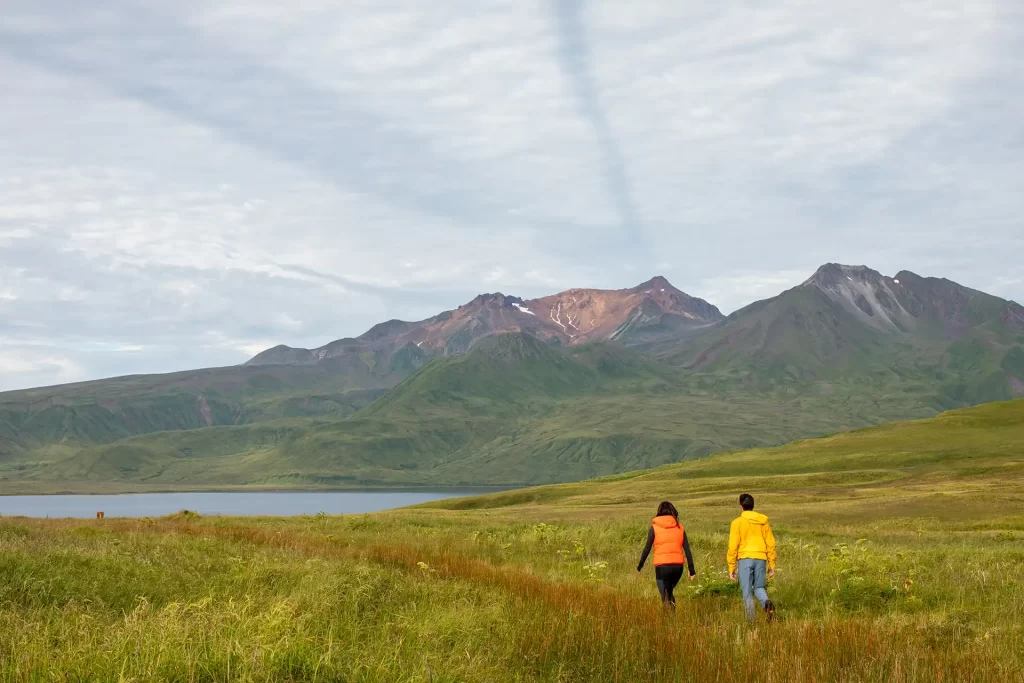
Adak is shaped by volcanic activity, glacial history, and its location between the Bering Sea and North Pacific Ocean. The island’s landscape includes rugged peaks, sweeping tundra, coastal cliffs, freshwater lakes, wetlands, rock and sand beaches, and windswept highlands.
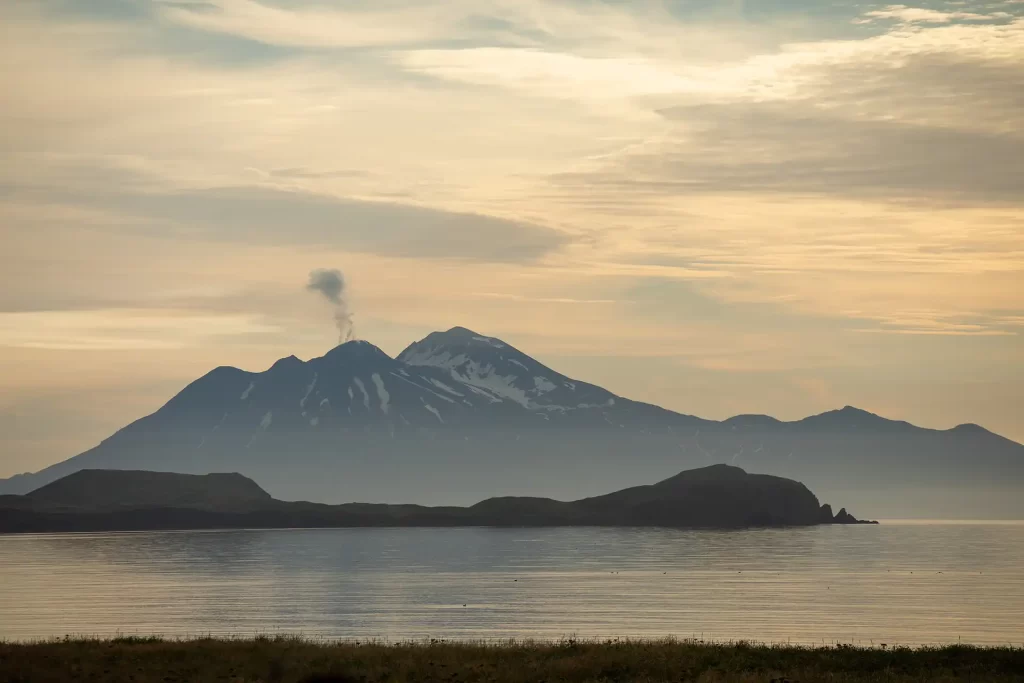
Mount Moffett, a dormant volcano rising 3,924 feet above the island, dominates the northern skyline. Elsewhere, steep ridgelines and low-growing vegetation create wide, unobstructed views across the island and surrounding seas.
There are few trees, and the landscape is covered primarily by grasses, mosses, and low shrubs. Without dense forests or extensive modern development blocking the view, Adak can feel enormous. Mountains appear closer than they are, roads stretch toward seemingly empty horizons, and the light can transform an entire valley or coastline within minutes.
The weather contributes to that transformation. Fog may hide a mountain in the morning, reveal it beneath bright sunlight in the afternoon, and cover it again before evening. A coastline that looks gray and severe beneath heavy clouds may become vivid green and blue when the sun breaks through.
For an overview of the island’s geography, community, and visitor experience, start with Exploring Adak, Alaska. The article describes Adak as a destination for adventurous, independent travelers, with approximately half of the island managed as part of the Alaska Maritime National Wildlife Refuge.
Why Does Adak Feel So Surreal?
One of the first things visitors notice about Adak is the contrast between the size of the community and the scale of the infrastructure around it.
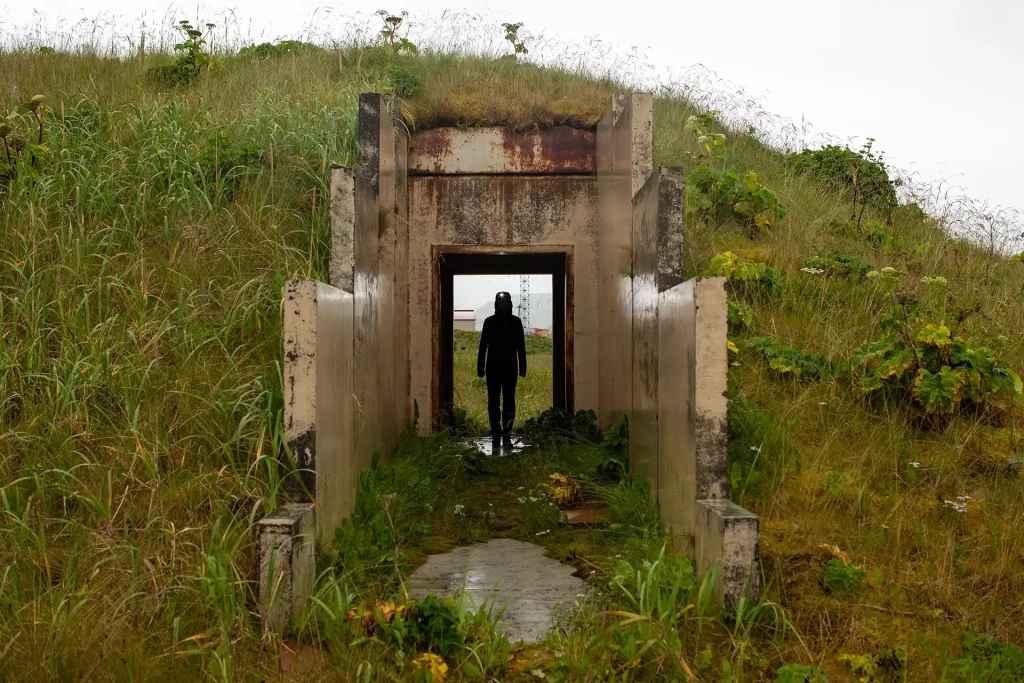
Only a small number of full-time residents live on the island today, primarily in the Sandy Cove and Kuluk neighborhoods. Yet roads, housing, workshops, airfields, utilities, and other structures remain from a time when Adak supported a major military presence. The result can feel a little like stepping through Alice’s looking glass: a tiny contemporary community set within infrastructure created for thousands of people.
The surreal quality continues as you travel around the island. Broad roads may have little or no traffic. Large former military structures stand against steep green mountains. Signs of human history appear along shorelines, near lakes, and across landscapes where wind, rain, and vegetation are steadily taking the lead again.
Adak, however, is not an abandoned island. It is a living community, a place of ongoing business and revitalization, and part of the traditional homeland of the Unangax̂ people. Visitors should treat homes, businesses, private property, cultural sites, and former military areas with respect.
To better understand the island, it helps to learn about all layers of its history. Read Adak’s Indigenous History for more about the enduring Unangax̂ connection to the Aleutian Islands, and When War Came to Adak for an introduction to Adak’s strategic role during World War II.
What Does the Weather Feel Like?
Adak is known as the “Birthplace of the Winds,” and the nickname is well earned.
The island sits near the convergence of the Bering Sea and North Pacific Ocean, directly within the path of the North Pacific storm track. Mountain ridges and narrow valleys can funnel and accelerate the wind, while passing weather systems bring sudden changes in rain, fog, clouds, and visibility.
You may experience wind, rain, fog, sunshine, and another round of rain in the same day. Conditions can also vary across the island. One area may be covered in fog while another is bright and clear.
During summer, temperatures typically remain cool and relatively consistent, ranging from the low 40s at night to around 60 degrees during the day. Summer generally brings milder conditions, but wind and rain remain part of the experience.
The best way to approach Adak’s weather is not to fight it. Dress in non-cotton layers, bring waterproof outerwear, wear sturdy footwear, and build flexibility into each day. If the weather does not cooperate with a particular hike or paddle, choose a more sheltered location, explore closer to town, or save the activity for later.
On Adak, the weather is not merely something happening in the background. It is part of what gives the island its character.
What Is the Community of Adak Like?
Adak’s current population is around 27 full-time residents, although the number of people on the island changes throughout the year as seasonal workers, contractors, and visitors arrive and depart. Most residents live in former military housing within the Sandy Cove and Kuluk neighborhoods.
The community’s workforce includes people involved in transportation, government, fishing, regional business, infrastructure, and other essential services. Adak may be small, but it is active, and the people who live there keep one of the country’s most remote communities operating.
The downtown core is relatively walkable and bikeable. Visitors will find basic services, limited dining and shopping, a medical clinic, and accommodations, but they should not expect the range of options found in a larger Alaska community.
That limited development is part of Adak’s appeal. There are no crowded downtown streets, souvenir districts, or lines at scenic viewpoints. Evenings tend to be quiet, giving visitors time to make dinner, review maps, watch the weather, and prepare for the next day.
Still, travelers should remember that Adak is someone’s home. Ask before photographing people or private property, obey posted signs, do not enter buildings, and avoid treating the community as though it exists solely for visitors.
What Does a Typical Day on Adak Feel Like?
A typical day on Adak begins by looking outside and checking the weather.
You might wake to fog moving across the mountains, steady wind against the windows, or brilliant sunshine illuminating Kuluk Bay. After breakfast, you can review your options and decide which activity best matches the conditions.
On a clear morning, that might mean hiking to a beach or viewpoint. If the wind is calmer, you might paddleboard on Andrew Lake, Clam Lagoon, or another protected body of water. A rainy period could be a good time to explore Adak’s military history or drive through the community before heading outside when conditions improve.
Visitors generally create their own itinerary instead of joining organized group tours. That independence provides the freedom to linger at a scenic overlook, spend hours watching birds along a wetland, or change direction because an unexpected pocket of sunshine appears across the island.
For ideas closer to town, see Adak Adventures: Day 1, which includes military history, paddleboarding, biking, and other activities near downtown. More adventurous travelers can consult Adak Adventures: Day 2 for hiking, e-biking, and destinations farther from the city.
Evenings are usually simple. You may return to your accommodations, prepare dinner, dry your gear, look through photographs, and plan several options for the following day. Guests staying at one of Adak Island Inn’s VIP units can watch a movie on one of the provided 85″ LED TVs. Without a long list of scheduled attractions, time on Adak develops its own rhythm.

What Kind of Nature and Wildlife Will You See?
Adak offers vast expanses of undeveloped land and a variety of habitats, including tundra, wetlands, lakes, mudflats, beaches, coastal cliffs, and nearshore waters.
Caribou roam the island, and there are no bears or other large predatory land mammals on Adak. Visitors may also see sea otters, harbor seals, marine mammals, and a remarkable variety of birds.
Birdwatching is one of the island’s signature experiences. Adak lies along migratory routes crossing the Pacific Ocean and Bering Sea, and birds arriving from Asia sometimes appear on the island during spring and fall migration. This makes Adak an especially compelling destination for birders hoping to observe species rarely seen elsewhere in North America.
The U.S. Fish and Wildlife Service identifies Adak as a spring and fall migration destination, with birds arriving from Asia and species such as the Aleutian song sparrow, emperor goose, marbled murrelet, and other seabirds found on or near the island.
Clam Lagoon is particularly valuable for wildlife viewing. Sea otters may gather in its protected waters, while harbor seals can be seen on mudflats or near the bridge at the lagoon’s entrance.
Visitors can stop at the Adak office of the Alaska Maritime National Wildlife Refuge on Finger Bay Road for hiking maps, brochures, and information about refuge lands and wildlife.
What Can You Do on Adak?
Adak’s activities are rooted in its landscape. Most experiences are self-guided, allowing travelers to choose their own pace and itinerary.
Hiking
Hiking options range from short walks near downtown to more demanding routes through undeveloped terrain.
The Gannet Rocks Trail offers a relatively accessible outing near the community, with views toward rocky seabird habitat. Horseshoe Bay provides a more challenging excursion and leads to a scenic shoreline framed by rugged coastal terrain and views of Mount Moffett. The final descent involves a steep section with fixed ropes, so hikers should use caution and bring proper footwear and gloves.
Andrew Lake offers another option, with lakeside terrain to explore and opportunities to combine hiking with fishing or paddleboarding.
Biking
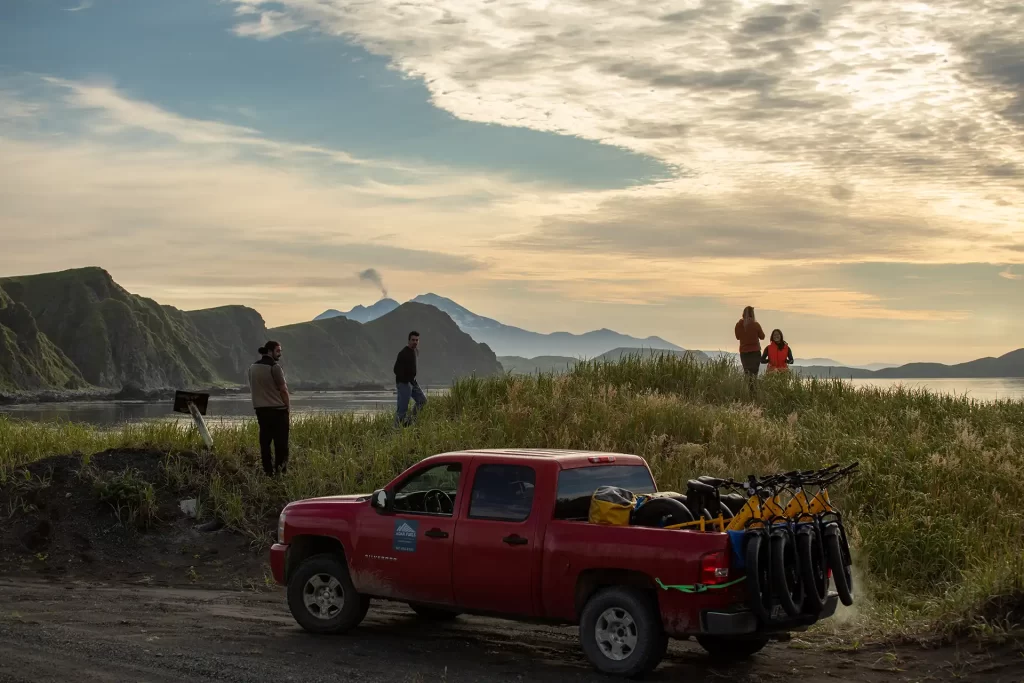
Adak’s roads and trails make biking a memorable way to see the island. Rentable fat-tire e-bikes are particularly well suited to the uneven roads, sandy areas, and rugged terrain.
Traveling by e-bike lets visitors cover more distance than they might on foot while remaining connected to the surroundings. It is possible to combine biking and hiking in a single day, using the bike to reach a trailhead before continuing on foot.
Paddleboarding
On calmer days, paddleboarding offers an entirely different perspective on Adak. Protected waters such as Andrew Lake, Clam Lagoon, and the Small Boat Harbor may provide suitable places to paddle, depending on conditions.
Travelers should always assess the weather before launching. Wind can increase quickly, even when conditions initially appear calm.
Fishing
Adak’s freshwater lakes and surrounding marine waters offer opportunities for anglers. Dolly arden, coho salmon, and kokanee may be found in island waters, depending on the location and season.
The U.S. Fish and Wildlife Service identifies the Aleutians as offering some of the refuge system’s best stream-fishing opportunities for salmon and Dolly Varden, with Adak accessible by commercial aircraft. Travelers should review current licensing requirements and applicable regulations before fishing.
Birdwatching and Wildlife Viewing
Visitors do not have to be expert birders to appreciate Adak’s wildlife. Wetlands, shorelines, tundra, and lagoons create many opportunities to stop, observe, and photograph animals.
Bring binoculars, a spotting scope if you have one, and a camera protected from rain. Allow time to watch rather than rushing from one destination to another. On Adak, some of the best experiences happen when you simply stay in one place and pay attention.
Exploring Adak’s History
Former military sites are found throughout the island, offering a visible connection to Adak’s role during World War II and the Cold War.
The Adak Historical Society has developed a self-guided resource describing 20 historic locations. Visitors can also learn more by reading When War Came to Adak, which explains how the island became a military stronghold following Japanese attacks and occupations in the Aleutians.
Historic exploration must be approached carefully. Former military buildings may be unstable, environmentally hazardous, or privately owned. A Land Use Permit does not authorize visitors to enter buildings, bunkers, or other structures.
How Does Adak’s History Shape the Experience?
Adak’s story began long before World War II.
The island is part of the traditional homeland of the Unangax̂ people, whose relationship with the Aleutian and Pribilof Islands spans generations. Unangax̂ communities developed sophisticated watercraft, clothing, hunting practices, and other knowledge suited to the region’s wet, windy, and marine environment.
Russian colonization brought violence, disease, forced labor, cultural suppression, and displacement. By the 1830s, Unangax̂ families had been forcibly removed from Adak to Russian-controlled settlements elsewhere in Alaska. The Unangax̂ people endured these disruptions, and their cultural connection to the region continues today. Adak’s Indigenous History provides more context about that connection and the effects of colonization.
During World War II, the U.S. Army Air Corps constructed a base and airfield on Adak. As many as 90,000 troops were stationed on the island during the height of military activity surrounding the Japanese occupation of Attu and Kiska. Adak later served as a Cold War listening post, weapons storage facility, and submarine surveillance center before its military mission officially ended in 1997.
In 2004, Aleut received 47,150 acres on Adak through a federal land transfer agreement. Today, Aleut and Aleut Ventures support responsible access, land stewardship, infrastructure, environmental remediation, tourism, and economic revitalization on the island.
Understanding that history changes how Adak feels. Its empty infrastructure is not merely an unusual backdrop for photographs. The island reflects Indigenous history and resilience, global conflict, military expansion and withdrawal, environmental cleanup, and the ongoing work of sustaining a remote community.
What Does “Remote” Really Mean on Adak?
Adak’s remoteness is real, and travelers should prepare for it.
Regular commercial flights operate only twice each week. Shopping and dining are limited, prices are higher than on mainland Alaska, and visitors cannot assume they will be able to purchase a forgotten item after arriving.
Bring enough food and snacks for your full visit, plus an additional day or two in case a return flight is delayed. Pack all prescription medication, preferred toiletries, weather-appropriate clothing, and critical personal supplies. If you plan to spend significant time outdoors, bring basic emergency gear as well.
Cellular service is strongest in and near town, with AT&T and GCI being the only reliable providers. Coverage can become unreliable or disappear entirely near remote beaches, lakes, coves, and trails. A satellite phone or satellite-based communication device is the most dependable way to remain connected outside the community.
Road conditions also reflect the island’s remoteness. Adak has many miles of roadway, but not every road resembles a maintained urban street. Expect potholes, uneven surfaces, and changing conditions.
None of this means Adak is inaccessible. It means visitors need to be more self-sufficient than they would be at a conventional vacation destination. That preparation creates greater freedom once the trip begins.
Do You Need a Land Use Permit?
Much of Adak is privately owned by Aleut. A Land Use Permit is required for recreational access to Aleut-owned lands, including activities such as hiking, fishing, hunting, and accessing remote coastlines outside the City of Adak.
The permit supports responsible access, the protection of Unangax̂ heritage sites, land stewardship, environmental cleanup, infrastructure improvements, and economic development. It also helps create a record of people traveling through Adak’s remote terrain.
A permit provides access to designated Aleut-owned land. It does not permit entry into Aleut-owned buildings, bunkers, or other structures. Entering those structures is prohibited regardless of permit status.
Travelers should review current requirements and obtain an Adak Land Use Permit before beginning their trip.
Why Do Travelers Describe Adak as “Another World”?
Adak feels like another world because it brings together elements rarely encountered in one destination.
It is a living community surrounded by infrastructure constructed for a much larger population. It is an ancestral homeland, a former military center, and a landscape where natural forces remain unmistakably in control. It has maintained roads but very little traffic, enormous views with few people, and outdoor activities without crowds or rigid schedules.
Mountains and coastlines appear and disappear in the fog. Caribou cross open terrain near reminders of Adak’s military past. Seabirds arrive from across the Pacific, and beaches stretch beneath changing skies without another visitor in sight.
The island does not offer the predictable experience of a developed resort destination. Activities may change with the weather. Roads can be rough. Services are limited. Travelers must prepare carefully and remain flexible.
In exchange, Adak offers something increasingly difficult to find: room to explore, time to pay attention, and the feeling of being entirely present in a place.
That is what Adak is actually like. It is rugged, remote, historic, occasionally demanding, and deeply rewarding for travelers who arrive ready to experience it on its own terms.
Frequently Asked Questions About What Adak Is Like
Is Adak really abandoned?
No. Adak has a small, active year-round community, along with seasonal workers and visitors. Although former military buildings and infrastructure remain across parts of the island, Adak is not abandoned. Approximately 27 full-time residents live primarily in the Sandy Cove and Kuluk neighborhoods.
What does Adak look like in person?
Adak has steep mountains, open tundra, wetlands, freshwater lakes, rocky and sandy beaches, coastal cliffs, and expansive ocean views. Sparse vegetation and limited development make the landscape feel especially broad and open.
Is Adak always windy?
Wind is a defining feature of Adak’s maritime climate, but conditions vary. Travelers may encounter strong winds, rain, fog, snow, and sunshine, sometimes within the same day. Summer tends to be milder, although wind and rapidly changing weather remain possible.
Does Adak have bears?
No. Adak does not have bears or other large predatory land mammals. Caribou live on the island, while marine mammals and numerous bird species can be observed along its shorelines, wetlands, and waters.
Can you explore the abandoned military buildings?
Visitors may view many former military structures from designated roads and accessible areas, but entering Aleut-owned buildings, bunkers, or other structures is prohibited. A Land Use Permit does not authorize building entry.
Will my cell phone work on Adak?
Cellular service is generally available in and near town through AT&T and GCI, but other providers are unreliable. Service is not guaranteed, especially outside the community. Travelers exploring remote areas should carry a satellite communication device. Guests staying at Adak Island Inn can rent Starlink Mini ($40/day) and car adaptors that can provide 24/7 connectivity.
Are there restaurants and stores on Adak?
Yes, but options and operating hours are limited. Tundra Tavern is currently the only operating restaurant. Visitors should bring the majority of their food, beverages, toiletries, and personal supplies from Anchorage rather than relying on local availability.
Is Adak a good destination for families?
It can be, especially for families comfortable with independent travel and outdoor activities. Children should have appropriate waterproof clothing and footwear and be able to adapt to changing weather and flexible plans. Parents should also consider the island’s limited medical resources and visitor services.
How many days should I spend on Adak?
At least three nights is a practical starting point because regular flights generally arrive and depart twice per week. A longer stay provides more flexibility for changing weather and allows visitors to explore the island without trying to fit every activity into a narrow window.
Experience Adak for Yourself
Adak cannot be fully understood through a photograph or description. Its scale, isolation, weather, history, and ever-changing landscape are best experienced firsthand.
Download Adak: A Travel Guide to begin preparing, explore more stories and travel ideas through the Venturing Beyond blog, and make Adak Island Inn your home base for a remote Alaska adventure unlike any other.